2026 Best Basket Cable Tray Manufacturers for Global Buyers

Choosing a basket cable tray manufacturer is not just a price comparison. Buyers need products that fit their routes, loads, environment, and installation plan. A tray that looks suitable in a catalog may behave differently once packed with cables above a busy production line. Small details matter.

This guide to the 2026 best basket cable tray manufacturers for global buyers examines practical factors behind a reliable supplier choice. It considers material options, wire diameter, mesh opening, finish quality, load information, and available accessories. Manufacturing capacity and quality-control practices also deserve attention. So does the clarity of technical drawings and product documentation. These details help engineering and purchasing teams compare suppliers on more than a headline price.

There is no single manufacturer that suits every project. Some buyers prioritize custom dimensions or rapid sampling; others need consistent production volumes and responsive export support. Shipping distance, packaging, communication, and after-sales service can change the overall value. Ask for current specifications, test records where relevant, and samples before making a large commitment. A polished website is not proof of consistent quality. Nor does one delayed reply tell the whole story. This comparison offers a useful starting point, but buyers should verify claims against their own project requirements. That extra check can feel tedious. It is often worthwhile.
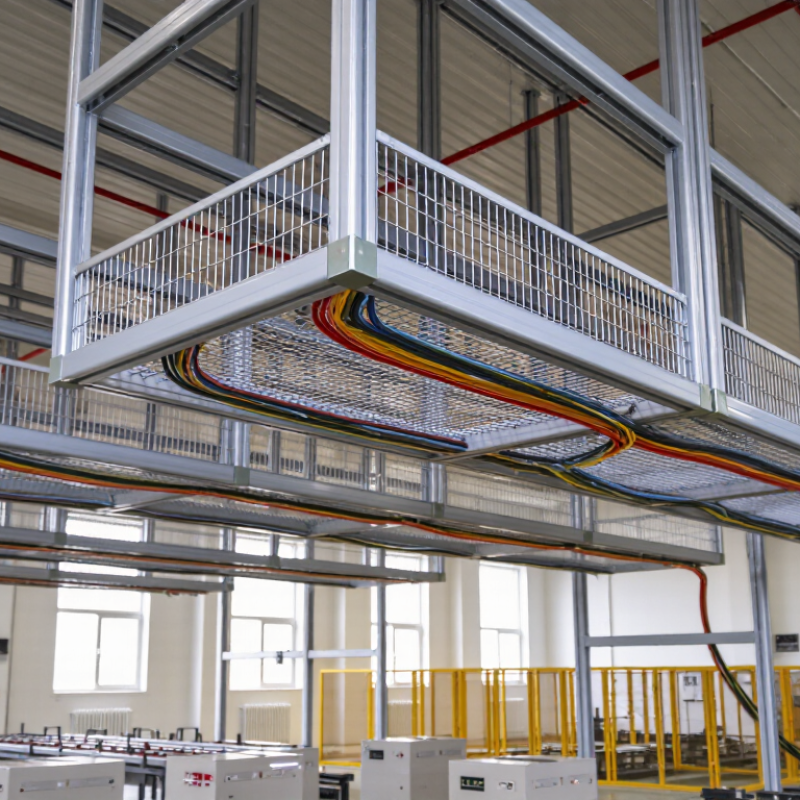
2026 Best Basket Cable Tray Manufacturers for Global Buyers

Basket Cable Tray Fundamentals: IEC 61537 Tests and NEMA VE 1 Ratings

For global buyers, basket cable tray quality begins with test evidence, not polished catalog images.

IEC 61537 evaluates cable support systems under defined mechanical and electrical conditions. Buyers should review load capacity, span, deflection, impact resistance, and electrical continuity results. These tests show how the tray may perform after installation.

NEMA VE 1 uses practical performance criteria for cable tray systems. It considers allowable load, support spacing, splice strength, and deflection limits. A listed load value has meaning only when the project uses the same span and installation conditions.

For example, a 2.4-meter span may perform differently from a 1.5-meter span. Check the actual configuration.

I have inspected installations where the tray looked rigid but sagged near a heavily filled junction. Small details mattered. Wire diameter, weld quality, surface treatment, and splice hardware changed the result. A certificate alone is not enough. Ask for test methods, sample dimensions, loading points, and acceptance limits. Also verify whether the report covers the exact basket design, not a similar product.

Material selection needs equal care. Galvanized steel may suit indoor utility rooms, while coated or corrosion-resistant finishes can support harsher environments. However, finish claims should match exposure conditions and project specifications. Some manufacturer data remains incomplete, which deserves scrutiny. A reliable supplier should explain limitations clearly, provide traceable documents, and support calculations for the selected span, load, and bonding arrangement.

2026 Market Benchmarks: Load Capacity, Span, Cable Fill, and Steel Grades

For global buyers, 2026 cable tray comparisons should begin with tested load capacity, not catalog width. NEMA VE 1-2023 uses load classes from 50 to 200 lb/ft. Its ratings depend on support spans, commonly 8, 12, 16, or 20 feet. IEC 61537:2023 also emphasizes mechanical strength and deflection testing. A 150 lb/ft tray may fail expectations when supports are spaced too far apart. Always check the exact span.

Cable fill deserves equal attention. Under NEC Article 392, many multiconductor cable installations use a 40% fill limit. Signal and control applications can differ. Leave practical space for pulling, heat, and future circuits.

Steel selection changes service life. ASTM A653 galvanized steel, often with G90 coating, suits many indoor and moderate outdoor projects. Stainless steel 304 or 316 performs better in corrosive locations. However, coating thickness is not a substitute for proper drainage.

Tips: Request certified load tables, deflection limits, and coating details. Compare weight per meter, not only selling price. Verify whether testing covers the proposed span. A neat spreadsheet can still hide weak assumptions. In my experience, cable weight is often underestimated, especially after adding fire-rated or shielded cables. Recheck the design after routing changes. Small changes matter.

How to Compare Manufacturers by ISO 9001, UL 568, and CE Compliance

2026 Best Basket Cable Tray Manufacturers for Global Buyers

How to Compare Manufacturers by ISO 9001, UL 568, and CE Compliance

Choosing a basket cable tray manufacturer requires more than checking a certificate list. ISO 9001 indicates a documented quality management system, not proof that every tray meets your project’s specifications. Ask how inspections cover wire diameter, weld consistency, coating thickness, and load testing. Request current certificates and confirm that their scope covers the relevant factory and product activities. A tidy certificate is useful, but the details matter.

Tips: Match UL 568 documentation to the exact tray type and configuration you plan to buy. Check whether tested dimensions, materials, and finishes align with your order. For projects in Europe, CE marking relates to applicable EU requirements; it is not a general quality award. Ask for the supporting declaration and technical documentation, then verify that they fit the intended installation. Small differences in width or finish can complicate a site handover.

Compare manufacturers using the same sample checklist. Review test reports, production traceability, inspection records, and packaging details. A practical supplier should explain how it handles nonconforming welds or coating defects, rather than offering only broad assurances. If possible, inspect a sample section and measure it yourself. That extra check takes time. It may still prevent an awkward mismatch after delivery. Some requirements vary by market and application, so confirm them with the project engineer before placing an order.

Global Buyer Scorecards: Price, Lead Time, MOQ, Warranty, and Export Coverage

For 2026, global buyers should compare basket cable tray manufacturers through a practical scorecard. Price matters, but the lowest quotation can hide thinner wire, weaker welds, or costly packaging. Request prices for identical widths, finishes, load ratings, and accessories. Include freight to your destination port. Small details change the final cost.

Lead time deserves careful checking. Ask for production days, inspection time, and sailing schedules separately. A supplier promising 15 days may exclude galvanizing or export documentation. Confirm the MOQ for standard trays, custom sizes, and replacement parts. Lower MOQs help pilot projects, while larger orders may reduce unit pricing. My early scorecards often underestimated accessory costs. That mistake was expensive.

Warranty terms should identify coverage, exclusions, and response procedures. A clear period is useful, but replacement handling matters more. Ask how damaged trays are reported and whether evidence is required. Export coverage should include destination history, packing standards, certificates, and customs experience. Check whether pallets fit common container dimensions. Verify documents before payment. Reliable manufacturers share drawings, test records, and realistic schedules without pressure. A clean scorecard still needs human judgment, especially when factory capacity changes during peak seasons.

Corrosion and Safety Data: Zinc Coating, ASTM B117 Tests, and Fire Performance

For global buyers, zinc coating is more than a finish: it protects cut wires, welds, and exposed edges from corrosion. The AMPP IMPACT study estimated corrosion costs at US$2.5 trillion annually, or 3.4% of global GDP, based on 2013 data. That figure covers many industries, not cable tray alone, but it shows why coating quality matters. Ask manufacturers for measured coating thickness, process details, and inspection records—not simply “galvanized” on a specification sheet.

ASTM B117 provides a controlled salt-fog test method; it does not set a universal pass time or prove years of field life. A tray that survives 1,000 test hours is not automatically suitable for every coastal or chemical environment. Check the report for specimen preparation, coating type, scribe condition, and failure criteria. ISO 9227 also cautions, in effect, that salt-spray results need careful interpretation. Small details matter. Welds can be vulnerable.

Fire performance needs separate evidence. IEC 61537 addresses cable-tray systems, including mechanical and electrical considerations, but buyers should verify the exact fire-related requirement for their project. Metal trays are generally non-combustible; coatings, supports, and installed cables can still affect system performance. Request test reports tied to the offered configuration, including joints and supports. Honestly, documentation is sometimes incomplete. Treat that as a reason to ask more, not as proof of failure.

2026 Best Basket Cable Tray Manufacturers for Global Buyers - Corrosion and Safety Data: Zinc Coating, ASTM B117 Tests, and Fire Performance
Comparison Dimension Reference Data What Buyers Should Verify
Electrogalvanized zinc finish Electroplated zinc coatings are generally thinner than hot-dip galvanized coatings. The specified coating thickness should be stated in micrometres (µm); the actual value depends on the product specification. Request the coating specification and thickness measurement method. Check whether welded joints and cut edges receive suitable post-treatment.
Pre-galvanized steel reference ASTM A653/A653M G90 specifies a zinc coating mass of 0.90 oz/ft² (about 275 g/m²) over both sheet surfaces combined. It is not a per-side coating value. Confirm that the stated coating designation applies to the actual tray material and that fabrication, welding, and exposed edges are addressed.
Hot-dip galvanizing after fabrication ASTM A123/A123M and ISO 1461 provide requirements for hot-dip galvanized coatings on iron and steel products. Minimum coating thickness depends on the applicable standard and the steel’s thickness and product category. Request the applicable standard, coating-thickness results, and inspection records. Confirm coverage inside weld areas, corners, and other difficult-to-coat locations.
ASTM B117 salt-spray testing ASTM B117 describes operation of a salt-spray (fog) testing apparatus. It does not itself set a universal exposure duration or product pass/fail criterion. Ask for the agreed exposure duration, specimen preparation, evaluation method, acceptance limits, and test report. Compare results only when these conditions are equivalent.
Interpreting salt-spray hours Exposure periods such as 96, 240, or 500 hours are project- or specification-selected test durations, not universal ratings for a cable tray or direct measures of service life. Do not convert chamber hours directly into years outdoors. Check whether the test specimen represents the finished tray, including welds, edges, and any post-treatment.
Corrosion-service selection Corrosion performance depends on the coating system, coating condition, pollutants, moisture, temperature, and installation environment. A salt-spray result alone does not define suitability for every site. Specify the actual exposure conditions, such as indoor dry areas, coastal atmosphere, chemical exposure, or wash-down zones, and request evidence relevant to that environment.
Fire performance of a metal tray A steel tray is a metal component, but the tray alone does not establish a fire-resistance rating or continued circuit integrity for an installed cable system. For life-safety circuits, request evidence for the complete tested configuration, including cables, tray, supports, fixings, spans, and installation conditions, against the project’s applicable fire-test requirements.
Zinc behavior at elevated temperature Zinc melts at approximately 419.5°C. This material property is not a fire-resistance rating and does not predict the performance of a complete tray-and-cable installation. Use the applicable system-level fire evidence and project requirements rather than relying on the melting point of the coating or base metal.
Mechanical and system standard IEC 61537 covers cable tray systems and cable ladder systems, including relevant requirements and tests for the systems within its scope. Check the edition and declared scope, and request test documentation for the offered configuration, including load, span, supports, and fittings where applicable.
Traceability and quality records Useful records include material identification, coating specifications, inspection results, and reports tied to the tested product or representative configuration. Match documents to the supplied product, finish, dimensions, and manufacturing process; confirm that any permitted substitutions are documented.

Note: The figures above are standards-based reference information, not product-specific certification or a guarantee of field performance. Confirm current standard editions, local regulations, and project acceptance criteria before procurement.

Have Questions?

Talk to a product specialist today: 1-800-308-6788

Snake Tray Catalog

snake tray® CATALOG

the new catalog is here. AVAILABLE IN PRINT AND ONLINE.

DOWNLOAD A PDF REQUEST A PRINTED COPY
CALL US TODAY