2026 Top PVC Mixer Manufacturers for Global Buyers

Choosing the right Pvc Mixer can shape production quality, energy use, and long-term operating costs. This guide introduces leading PVC mixer manufacturers for global buyers in 2026. It focuses on practical evidence, not polished brochures alone.

The evaluation considers mixing uniformity, batch capacity, rotor design, temperature control, dust sealing, and discharge speed. A reliable machine should handle resin, stabilizers, plasticizers, and additives without creating visible hot spots. Factory experience matters. Buyers should request test videos, sample batches, maintenance records, and references from comparable plants. A clear PLC interface also helps operators monitor heating, cooling, torque, and cycle time. Small details matter.

Supplier reliability receives equal attention. We examine engineering support, spare-part availability, installation guidance, warranty terms, and response times across regions. Manufacturers should provide traceable specifications and documentation that supports local safety and environmental requirements. Certifications can help, but they do not replace independent verification. A neat brochure is not proof. No ranking is perfect. Product updates, regional service changes, and inconsistent public data can affect comparisons. Buyers should confirm current factory capacity, delivery schedules, payment conditions, and after-sales commitments before ordering. This article offers a careful starting point, based on measurable criteria and practical purchasing concerns. It does not promise that one supplier fits every application. A laboratory, compounding plant, and large-volume production line may need very different mixer configurations. That difference is easy to overlook. Real performance appears in repeatable batches, stable temperatures, clean discharge, and dependable support after installation.
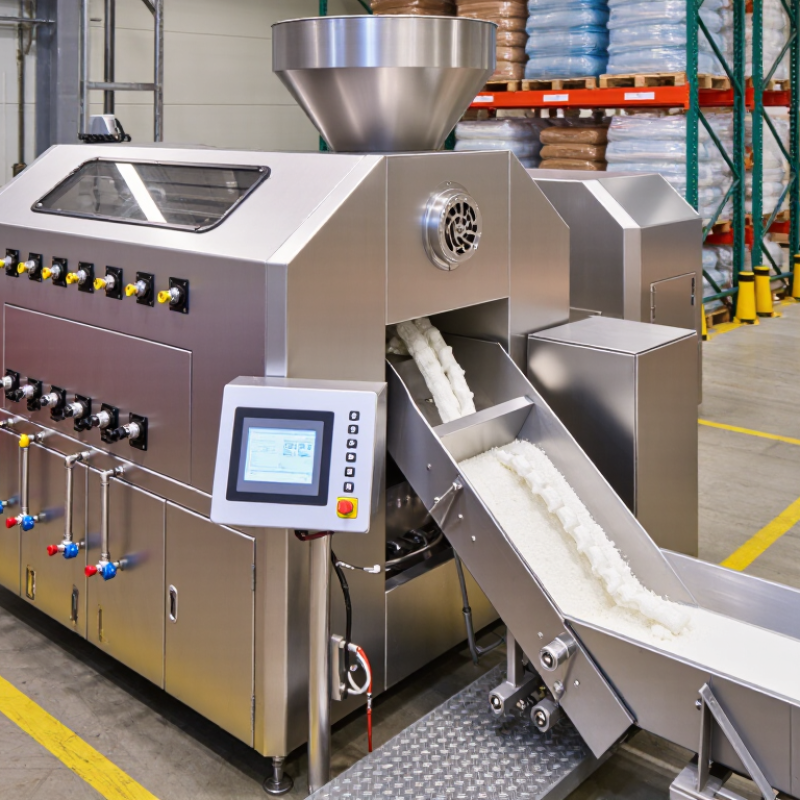
2026 Top PVC Mixer Manufacturers for Global Buyers

What PVC Mixers Are and Why They Matter in PVC Processing

2026 Top PVC Mixer Manufacturers for Global Buyers

What PVC Mixers Are and Why They Matter in PVC Processing

PVC mixers are industrial machines that combine PVC resin with stabilizers, lubricants, pigments, and performance additives. Their purpose is simple: create a uniform dry blend before extrusion, molding, or calendaring.

Many PVC processing lines use a hot mixer and a cooling mixer together. The hot mixer uses controlled friction to distribute additives through the resin. A temperature sensor helps prevent early fusion or thermal damage. The cooling mixer then lowers the blend temperature before storage or further processing.

Small details matter. A well-designed mixing chamber should support consistent circulation without creating dead zones. The blades need suitable geometry and wear resistance. Sealing also matters because escaped powder can affect housekeeping and operator safety. In practical evaluations, buyers should inspect discharge time, temperature control, batch repeatability, and cleaning access.

A fast motor does not guarantee a good blend. It may increase heat too quickly. That can create uneven fusion behavior later. No mixer performs perfectly under every formulation. Material moisture, additive loading, and batch size can change the result.

Manufacturers should provide test data, operating limits, maintenance guidance, and spare-part information. Buyers can request trial batches using their actual PVC formulation. This reveals more than a polished catalog. Energy use, noise, vibration, and operator access deserve attention too. These factors are easy to overlook during a factory visit.

2026 PVC Mixer Guide: What PVC Mixers Are and Why They Matter

PVC mixers combine resin, stabilizers, lubricants, plasticizers, pigments, and other additives into a uniform dry blend. The temperature windows below represent typical industrial processing ranges: controlled heating improves additive absorption, while rapid cooling helps prevent premature fusion, discoloration, and material degradation before extrusion or molding.

How to Evaluate PVC Mixer Manufacturers for Global Purchasing

For global buyers, evaluating PVC mixer manufacturers requires more than comparing prices. Grand View Research valued the global PVC market at about USD 45.8 billion in 2023. It projects steady growth through 2030. PlasticsEurope reported global plastics production near 414 million tonnes in 2023. This scale increases pressure on stable mixing, energy control, and reliable after-sales support.

Ask manufacturers for verified data, not attractive brochures.

Review batch capacity, rotor speed, torque curves, heating and cooling rates, and discharge temperature. A proper factory audit should inspect welding quality, bearing protection, electrical cabinets, and spare-parts storage. Request a test using your actual PVC formulation. Measure dispersion, cycle time, power consumption, and powder residue inside the vessel. Small residue can become a costly quality problem.

Check the quality system against ISO 9001 and machine safety practices against ISO 12100 and IEC 60204-1. Also examine installation records from similar climates. Humid ports, unstable power, and limited maintenance skills can change real performance. The cheapest quotation may exclude commissioning, training, tooling, or replacement seals. That omission matters. A scoring sheet helps, but it is not perfect. Supplier claims still need independent verification, clear acceptance criteria, and documented corrective actions before shipment.

Leading PVC Mixer Manufacturers to Consider in 2026

In 2026, leading PVC mixer manufacturers deserve attention for more than production capacity. Grand View Research reported that the global PVC market reached approximately USD 45.66 billion in 2023, with projected growth through 2030. That expansion increases demand for stable, efficient compounding equipment.

Buyers should examine batch consistency, torque control, heating response, and dust containment. These details matter on a factory floor.

Look for mixers with independently controlled temperature zones, hardened contact surfaces, and accessible discharge systems. A reliable manufacturer should provide test records, material compatibility data, and practical after-sales training.

Energy monitoring is also important. The International Energy Agency identifies industrial efficiency as a major route to reducing manufacturing emissions. A mixer that shortens blending time can lower electricity use, but claimed savings require plant-specific testing.

Do not trust impressive brochures alone.

Ask for trials using your actual PVC formulation and filler ratio. Small differences in moisture, stabilizer loading, or powder flow can change results.

I would also inspect spare-part availability near the installation site. That point is easy to overlook.

The OECD’s Global Plastics Outlook highlights the continuing pressure to improve plastics circularity, so future-ready mixers should handle recycled content without severe batch variation.

Still, recycled PVC can behave unpredictably. Even experienced buyers may need several trials before approving a supplier.

How PVC Mixer Technologies and Specifications Compare

PVC Mixer Technologies and Specifications Compared

Global buyers are comparing PVC mixers more carefully as capacity, energy use, and batch consistency become critical. PlasticsEurope reported 413.8 million tonnes of global plastics production in 2023. PVC compounds represent a demanding segment because heat, shear, and moisture must remain controlled.

High-speed hot mixers commonly use stainless-steel vessels, adjustable rotor speeds, and jacketed temperature control. Discharge temperatures often range from 110°C to 130°C, depending on the formulation. Cold mixers then reduce the blend temperature, commonly below 50°C, before storage or extrusion. A larger motor is not automatically better. Torque, rotor design, fill ratio, and cooling efficiency must work together. Some specifications look impressive on paper but perform poorly with uneven powder loading.

Tips: Compare usable volume, not total vessel volume. Request energy data per batch, temperature curves, noise readings, and cleaning time. Check whether the mixer supports your actual PVC stabilizer and plasticizer system. ISO 9001 certification supports process control, but it does not prove mixing quality by itself. Ask for batch records and trial results. One overlooked detail is discharge design; trapped powder can affect the next formulation. Buyers should also review local electrical standards and spare-part availability. These checks may feel slow, yet they reduce costly commissioning mistakes.

2026 Top PVC Mixer Manufacturers for Global Buyers - How PVC Mixer Technologies and Specifications Compare

Anonymous technology comparison based on commonly specified industrial PVC mixing equipment configurations. Actual performance depends on formulation, bulk density, moisture, batch size, and process conditions.

Technology Category Typical Working Capacity Main Mixing Configuration Typical Rotor or Tool Speed Heating and Cooling Method Typical Discharge Temperature Best-Fit PVC Applications
High-Speed Hot Mixer 25–1,000 L working volume Vertical vessel with high-speed dispersing blades and pneumatic or hydraulic discharge gate 750–1,500 rpm, depending on vessel size and formulation Frictional heating with optional jacket or external cooling system 110–130°C for many rigid PVC dry blends Rigid PVC pipes, profiles, siding, fittings, and general dry-blend compounding
Hot-and-Cold Mixer Set Hot mixer: 100–1,000 L; cold mixer: 200–3,000 L High-speed hot mixer paired with a slower horizontal cooling mixer Hot mixer: 750–1,500 rpm; cold mixer: approximately 20–40 rpm Hot stage uses friction; cold stage uses water-cooled jacket and hollow shaft or paddles Hot discharge commonly 110–130°C; cooled blend commonly below 45–55°C Continuous PVC production lines requiring controlled bulk temperature before extrusion or storage
Horizontal Paddle Mixer 100–5,000 L working volume Single or twin horizontal shafts with paddles, ploughs, or ribbon-style mixing tools 20–80 rpm for gentle blending; higher speeds available on specialized designs Jacketed shell and/or hollow shaft for heating or cooling Usually maintained below the formulation’s fusion temperature PVC dry blends containing heat-sensitive additives, masterbatch premixes, and large-volume blending
Intensive Ploughshare Mixer 50–3,000 L working volume Horizontal plough-shaped blades with optional high-speed chopper units 60–250 rpm for main shaft; chopper speed may exceed 1,000 rpm Jacketed vessel for controlled heating or cooling Process-specific; commonly operated below 120°C for dry PVC blending PVC formulations needing strong dispersion of fillers, pigments, stabilizers, or impact modifiers
Ribbon Blender 100–5,000 L working volume Horizontal double-ribbon agitator with low-shear folding and convective movement 15–60 rpm Optional jacketed trough for temperature conditioning Normally near ambient temperature unless a heated process is specified Premixing PVC resin with stabilizers, lubricants, pigments, and other dry additives
Laboratory or Pilot Mixer 1–30 L working volume Compact high-speed blade, planetary, or laboratory hot-and-cold configuration Variable speed, commonly 300–3,000 rpm Electric heating with water or air cooling, depending on design Programmable, commonly 80–140°C for formulation trials Formulation development, additive screening, quality control, and scale-up testing
Vacuum-Enabled Mixer 20–1,500 L working volume High-speed or intensive mixer fitted with sealed cover and vacuum connection Typically 300–1,500 rpm, depending on configuration Jacketed vessel with vacuum-assisted moisture and air removal Selected according to PVC formulation and volatile-removal requirements Moisture-sensitive formulations, reduced-void processing, and blends requiring improved powder deaeration
Automated Batch Mixing System 100–3,000 L per batch Integrated weighing, dosing, hot mixing, cooling, discharge, and recipe-management modules Variable speed with recipe-based control Automatic temperature control using jacketed heating and cooling circuits Controlled by recipe; alarm limits are commonly configured around target discharge temperature High-throughput PVC plants seeking repeatability, traceability, lower labor demand, and process data collection
Explosion- or Dust-Controlled Configuration 50–2,000 L working volume Industrial mixer with sealed covers, grounded components, dust extraction, and safety interlocks Application-dependent; commonly 300–1,500 rpm for intensive mixing Jacketed or external thermal-control system with monitored temperature limits Set according to the formulation’s thermal stability and site safety assessment Facilities handling fine powders, combustible dust risks, or strict occupational and environmental controls

What Global Buyers Should Check Before Placing an Order

When comparing 2026 PVC mixer manufacturers, global buyers should inspect more than price and production capacity. Ask for the mixer’s working volume, heating method, rotor design, discharge speed, and material compatibility. A supplier should provide clear drawings, motor specifications, safety documents, and a realistic delivery schedule. Vague answers deserve attention.

Request a sample trial using your actual PVC formulation. Check mixing uniformity, temperature stability, power consumption, noise, and cleaning time. Watch the discharge gate during repeated cycles. Small delays can become costly production losses.

Ask whether the manufacturer can provide factory acceptance testing, installation guidance, spare parts, and operator training. Independent inspection is useful when technical evidence feels incomplete.

Global compliance also needs careful review. Confirm electrical standards, machine guarding, emergency stops, labeling, and documentation required in the destination market. Review warranty terms, remote support, replacement-part availability, and response times in writing.

A polished brochure does not prove reliable performance. Some buyers focus too heavily on stainless steel surfaces and overlook control-system access. That is an easy mistake. Leave room for correction; the first specification may not fit your factory layout, batch size, or future output. Suppliers willing to discuss weaknesses openly are often easier to evaluate.

Have Questions?

Talk to a product specialist today: 1-800-308-6788

Snake Tray Catalog

snake tray® CATALOG

the new catalog is here. AVAILABLE IN PRINT AND ONLINE.

DOWNLOAD A PDF REQUEST A PRINTED COPY
CALL US TODAY