2026 Best Stainless Steel Round Tube Suppliers?

Choosing the 2026 best Stainless Steel Round Tube suppliers requires more than comparing prices or polished websites. The International Stainless Steel Forum reported global stainless crude steel production of about 58.4 million tonnes in 2023. That scale shows strong demand, but it also increases the risk of inconsistent quality across international supply chains.

A reliable supplier should provide traceable heat numbers, material certificates, and clear compliance with standards such as ASTM A554, ASTM A269, or EN 10217-7. These documents help buyers verify chemistry, mechanical performance, dimensional tolerance, and intended service conditions. Grand View Research and similar market studies also identify construction, automotive, food processing, and industrial equipment as important stainless steel demand sectors. Each sector needs different tube characteristics. A polished 304 tube may suit architectural handrails, while a 316L tube offers stronger corrosion resistance near saltwater or chemical exposure.

Look closely.

This guide evaluates suppliers through practical evidence, including manufacturing capacity, welding quality, inspection systems, export experience, and response speed. A supplier that answers quickly may still fail on ovality or wall thickness. That matters when a tube must slide into a precisely machined fitting.

The assessment is not perfect. Public supplier information can be incomplete, and reported market figures may use different definitions. Buyers should request recent mill certificates, independent inspection options, sample measurements, and production references before placing large orders. The best supplier is not always the cheapest. It is the one that delivers consistent Stainless Steel Round Tube quality, reliable documentation, and realistic lead times.
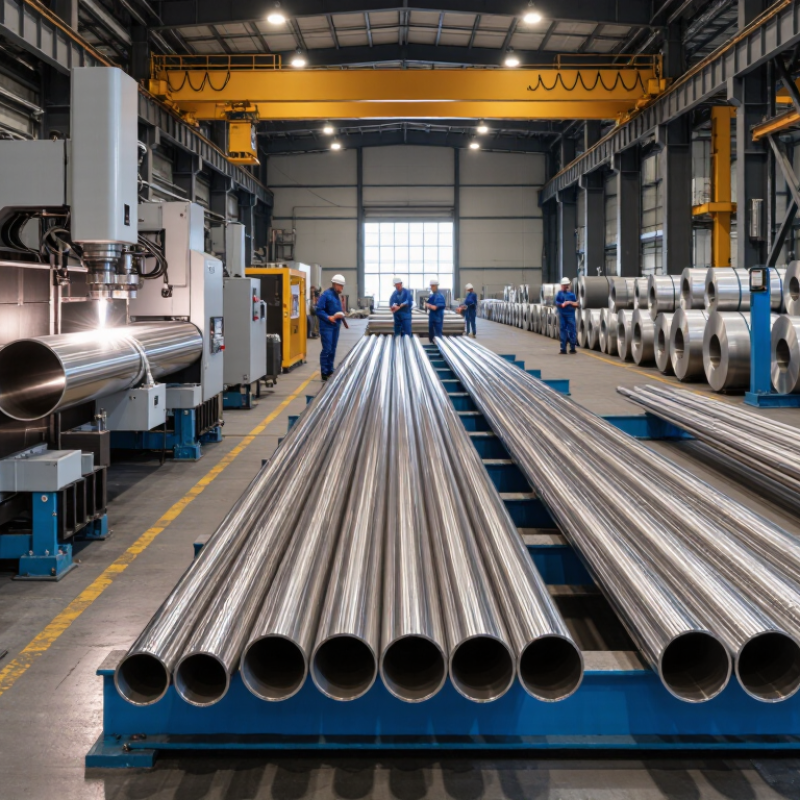
2026 Best Stainless Steel Round Tube Suppliers?

What Is a Stainless Steel Round Tube and Why Does Supplier Choice Matter?

A stainless steel round tube is a hollow, circular section made from corrosion-resistant alloy. Its performance depends on grade, wall thickness, outside diameter, weld quality, and surface finish. Common applications include heat exchangers, food-processing lines, railings, and structural frames. It looks simple. It is not.

Supplier choice matters because production consistency affects safety, service life, and total cost. The International Stainless Steel Forum reported global stainless crude steel production of about 60.6 million tonnes in 2023. That scale creates broad material variation. A responsible supplier should provide heat numbers, mill certificates, dimensional records, and relevant test results. Standards such as ASTM A269 and ASTM A554 can help define tube quality, but a certificate alone is not enough. Inspect the actual tube.

In practical purchasing, compare tolerances, ovality, weld-bead control, polishing quality, packaging, and delivery stability. A smooth tube may still contain scratches beneath protective film. A correct grade may still fail when chloride exposure is underestimated. Therefore, ask for sample inspection data and clarify the intended environment before ordering. No scorecard is perfect. Review rejected pieces, not only successful samples. Industry reports show market scale, but factory evidence reveals supplier reliability. The best supplier is not always the cheapest; it is the one that can repeatedly match the drawing and explain deviations honestly.

Which Stainless Steel Grades and Tube Specifications Are Available?

Choosing a stainless steel round tube supplier starts with grade selection, not price. The International Stainless Steel Forum reported 58.4 million tonnes of global stainless crude steel production in 2023. That scale reflects broad demand, but it does not make every grade interchangeable.

Grade 304 and 304L suit general fabrication, food equipment, and indoor process lines. The low-carbon 304L version supports cleaner welded joints. Grade 316 and 316L offer better resistance to chlorides, seawater mist, and chemical exposure because of added molybdenum.

For elevated temperatures, 321 can be considered, while 430 serves many lower-cost indoor applications. Duplex 2205 provides higher strength, but welding controls become more demanding. A practical mistake is treating “stainless” as one material.

Specifications must match the service conditions.

ASTM A269 commonly covers seamless and welded tubing for general corrosion-resistant service. ASTM A554 addresses ornamental and mechanical tubing, including polished surfaces. Buyers should define outside diameter, wall thickness, length, straightness, tolerance, surface finish, and testing requirements.

Common finishes include mill, brushed, and mirror polish. For example, a 38.1 mm outside diameter tube with a 1.5 mm wall behaves differently from a 2.0 mm wall tube under pressure and bending.

EN 10217 and EN 10216 may also apply in European projects. Check the actual standard edition. Supplier certificates, heat numbers, chemical analysis, and mechanical test results should trace back to the delivered tube. Even experienced teams sometimes overlook internal surface cleanliness.

How to Evaluate Stainless Steel Round Tube Suppliers in 2026

2026 Best Stainless Steel Round Tube Suppliers?

How to Evaluate Stainless Steel Round Tube Suppliers in 2026

Choosing a stainless steel round tube supplier requires more than comparing prices. Ask for current mill certificates, chemical analysis, and mechanical test results. Reliable documents should match each tube’s heat number and production batch. Check whether the supplier follows recognized standards, such as ASTM, EN, or equivalent specifications.

Inspect samples carefully. Measure outside diameter, wall thickness, ovality, and straightness with calibrated tools. Examine the surface under bright light for scratches, pits, discoloration, or uneven polishing. For welded tube, request information about seam control and post-weld treatment. A professional supplier should explain these details without avoiding technical questions.

Traceability matters.

Review packaging before placing a large order. Tubes should have protective caps, dry wrapping, and clear labels showing grade, size, quantity, and batch data. Ask about testing frequency, inspection procedures, production capacity, and realistic lead times. A low quotation can hide weak quality control or inconsistent dimensions.

Supplier audits can reveal more than brochures. Examine factory records, testing equipment, storage conditions, and corrective-action procedures. I have learned that fast replies do not always indicate dependable service. One overlooked issue is communication after delivery, especially when a specification needs clarification. Request a small trial order and record every measurement. Even experienced buyers can miss minor ovality until assembly begins. Reliability is demonstrated through repeatable results, transparent evidence, and practical technical support.

2026 Best Stainless Steel Round Tube Suppliers? — How to Evaluate Stainless Steel Round Tube Suppliers in 2026
Evaluation Dimension Recommended Weight 2026 Selection Benchmark Required Verification Evidence Scoring Guidance
Material Grades and Chemistry 20% Regular availability of common austenitic grades such as 304/304L 316/316L and, where required, ferritic or duplex grades. Heat numbers should provide traceability from raw material to finished tube. Mill Test Certificate, chemical composition report, heat-number traceability, and positive material identification records when specified. 5 = Full grade range and complete traceability
3 = Standard grades only
1 = Incomplete or unverifiable chemistry records
Applicable Product Standards 15% Capability aligned with the purchase specification, such as ASTM A269 for seamless and welded austenitic stainless steel tubing, ASTM A554 for ornamental and decorative welded tube, or ASTM A312 for pressure-service pipe where applicable. Current certificates, inspection plans, standard editions listed on quotations, and sample test reports linked to the ordered product. 5 = Standard-specific production and testing
3 = General compliance statement
1 = No identifiable standard
Dimensional Range 10% The supplier should cover the buyer’s required outside diameter, wall thickness, length, and profile tolerance. Common commercial round-tube programs include small precision tubing through larger structural and process-tube sizes. Published size chart, tolerance table, tooling list, sample dimensional inspection report, and confirmation of cut-to-length capability. 5 = Required sizes available with documented tolerances
3 = Limited size coverage
1 = Size range cannot be verified
Surface Finish and Appearance 10% Finish should match the application, including mill finish, polished finish, brushed finish, or hygienic finish. For decorative applications, the finish must be consistent around the complete circumference. Surface-finish samples, roughness readings where specified, polishing procedure, protective-film details, and visual inspection criteria. 5 = Repeatable finish with acceptance limits
3 = Finish described but not measured
1 = No finish-control procedure
Welding and Heat Treatment Control 10% Welded tube should have controlled forming, welding, sizing, and heat-treatment procedures. For corrosive or hygienic service, internal weld quality and post-weld treatment are especially important. Welding procedure information, heat-treatment records when required, weld inspection results, and details of annealing, pickling, or passivation. 5 = Documented process and inspection controls
3 = Basic weld inspection only
1 = No process evidence
Mechanical and Corrosion Testing 10% Testing should reflect the applicable standard and end use. Typical checks include tensile properties, hardness, flattening, flaring, hydrostatic or pneumatic testing, and intergranular-corrosion testing when specified. Batch test reports, laboratory accreditation details where relevant, calibration certificates, and clear sampling frequency. 5 = Complete, batch-linked test package
3 = Partial test package
1 = Generic or non-traceable test claims
Quality Management System 8% A documented quality management system, preferably certified to ISO 9001:2015, with procedures for nonconforming products, corrective action, document control, and customer complaints. Valid certificate, certification scope, audit status, corrective-action records, and inspection-plan samples. 5 = Valid certification and mature controls
3 = Internal quality system without current certification
1 = Informal quality control
Order Flexibility and Minimum Order Quantity 5% The supplier should state minimum order quantities, available stock, production-lot requirements, sample policy, and cut-length charges before order placement. Written quotation, sample terms, stock list, production-lot policy, and transparent surcharge schedule. 5 = Clear terms and practical sample support
3 = Terms available after negotiation
1 = Unclear minimums or hidden charges
Lead Time and Delivery Reliability 5% Delivery promises should distinguish stocked material from made-to-order production. A reliable supplier provides realistic production, inspection, packing, and transport timelines. Historical on-time-delivery data, production schedule, logistics options, shipment records, and escalation procedure. 5 = Measured delivery performance and proactive updates
3 = Estimated lead time only
1 = Repeated unexplained delays
Packaging and Export Protection 3% Tubes should be protected against scratching, contamination, moisture, and deformation. Long products require suitable bundling, end protection, and loading support. Packaging specification, loading photographs, moisture-protection method, marking format, and insurance or damage-claim procedure. 5 = Application-specific packaging plan
3 = Standard bundling only
1 = Packaging risks are not addressed
Technical Communication and After-Sales Support 4% The supplier should respond clearly to material, tolerance, finish, testing, documentation, and installation questions before production. Nonconformity claims should have a defined response time. Technical quotation quality, drawing-review process, response-time commitment, claim procedure, and corrective-action examples. 5 = Fast, technically accurate support
3 = Commercial support with limited technical depth
1 = Slow or incomplete responses
Recommended decision method: Rate each dimension from 1 to 5, multiply the rating by the recommended weight, and compare the weighted totals. Before final approval, request a representative sample, verify the material certificate against the heat number, inspect dimensions and surface finish, and confirm all requirements in the purchase specification.

What Quality Standards, Certifications, and Services Should Buyers Check?

The best stainless steel round tube supplier in 2026 should prove quality, not merely promise it.

The World Steel Association reported about 1.89 billion tonnes of crude steel production in 2023, showing the market’s scale and complexity.

Buyers still need product-specific evidence.

Check whether tubes meet ASTM A269, ASTM A554, ASTM A312, or the relevant EN standard. Confirm grade, outside diameter, wall thickness, tolerance, and surface finish.

Request an EN 10204 3.1 inspection certificate for each batch. It should show heat numbers, chemical composition, mechanical results, and test references. Positive material identification and eddy-current testing add useful protection. Hydrostatic testing may matter for pressure service.

Certifications require careful checking. ISO 9001 supports controlled processes, but it does not guarantee perfect tubes. Verify the certificate scope, site address, expiry date, and certification body. ISO 14001 can indicate environmental management, while ISO 45001 reflects occupational safety controls.

Ask for traceability from melting to packing, especially for critical applications.

The International Stainless Steel Forum reported global stainless steel production of roughly 58.4 million tonnes in 2023, so documentation discipline matters across a crowded supply chain.

A supplier should also provide cutting, deburring, packaging, sampling, and complaint-response procedures.

Surface appearance can mislead. A bright tube may still have poor dimensional control.

No checklist is perfect. Audits, sample testing, and clear acceptance criteria remain necessary.

How to Compare Pricing, Lead Times, and Supplier Reliability?

2026 Best Stainless Steel Round Tube Suppliers?

Comparing stainless steel round tube suppliers requires more than checking the price per kilogram. Request the same grade, outside diameter, wall thickness, length, surface finish, and quantity from every supplier. Then calculate the landed cost, including cutting, packaging, freight, duties, and inspection fees. A low quote can look attractive. Hidden charges often appear later. I sometimes overvalue the cheapest offer, which is a sourcing mistake worth avoiding.

Lead time should be divided into production, quality inspection, and transit. Ask for a written schedule with milestone dates, not only “fast delivery.” A reliable supplier should explain capacity during peak months and identify possible material shortages. Request a sample or a small trial order before committing to large volumes. Small errors matter. Compare whether promised dates match actual dispatch records and container booking practices.

Supplier reliability depends on evidence. Review heat numbers, mill test reports, dimensional records, and material traceability documents. Check whether the supplier can maintain tolerance across repeated batches, not just one impressive sample. Clear responses also matter. Slow answers during quotation may become slower support after payment. I would document every specification, approval, and change request. Even careful reviews can miss packaging damage or measurement differences, so an independent inspection may be practical for critical orders.

Have Questions?

Talk to a product specialist today: 1-800-308-6788

Snake Tray Catalog

snake tray® CATALOG

the new catalog is here. AVAILABLE IN PRINT AND ONLINE.

DOWNLOAD A PDF REQUEST A PRINTED COPY
CALL US TODAY