China Best PTFE Fuel Hose Manufacturers and Suppliers?

Choosing a reliable supplier for Ptfe Fuel Hose is not just a price comparison. The right hose must suit the fluid, operating temperature, pressure range, and routing conditions of its application. A clean-looking product photo proves little. Ask for technical data sheets, material details, pressure ratings, and test documentation that match the exact hose construction being offered.

China has manufacturers and suppliers serving different markets, from standard assemblies to custom lengths and fittings. Their capabilities can vary. Some focus on production scale; others offer more support with design details, samples, and quality checks. That difference matters when a project needs a specific inner diameter, stainless-steel braid, or end connection. Small details count. Confirm how dimensions are measured, what inspection steps are used, and whether batch records can be provided. Clear answers are a useful sign, though not a guarantee.

This guide looks at practical ways to compare manufacturers, assess product information, and ask better questions before requesting a quotation. It also considers communication, production capacity, lead times, and after-sales support. These points can help buyers build a more informed shortlist rather than relying on broad claims alone. One caution remains: a supplier’s website may not show every limitation, and a neat specification sheet can leave important questions unanswered. Verify the details against your own requirements. A careful review takes time, but it may prevent costly mismatches later.
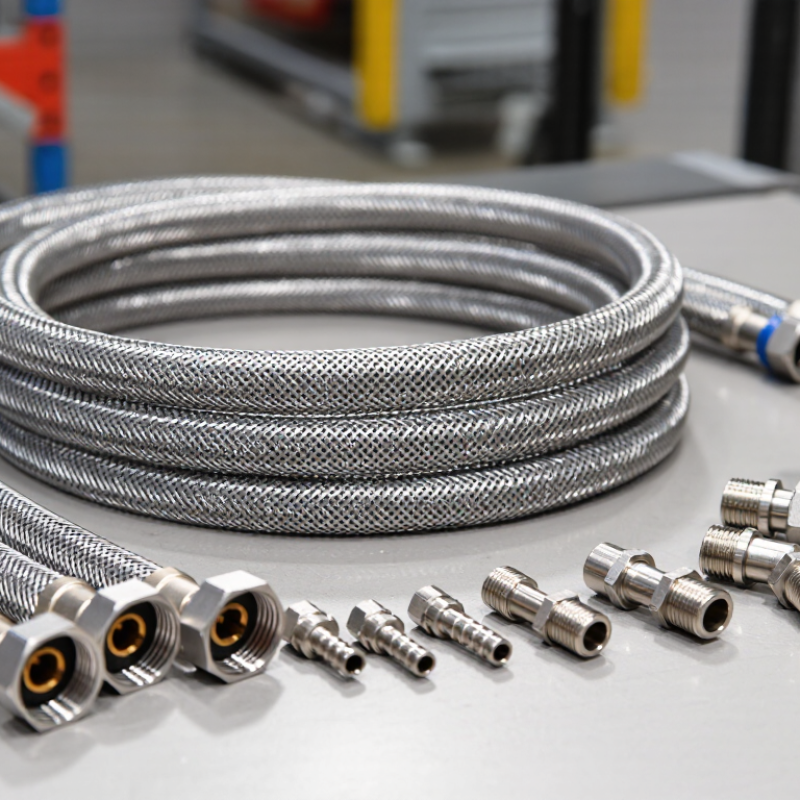
China Best PTFE Fuel Hose Manufacturers and Suppliers?

What PTFE Fuel Hoses Are and How They Are Constructed

A PTFE fuel hose is a flexible assembly designed to carry fuel through a low-friction, chemically resistant inner tube. PTFE, or polytetrafluoroethylene, tolerates many fuels and resists heat better than common rubber liners. It is not indestructible. Temperature, pressure, fuel blend, and bend radius still matter.

The hose usually has a PTFE inner liner surrounded by braided reinforcement, often stainless steel. The braid helps the assembly withstand pressure and resist abrasion. Some liners are smooth inside; others are corrugated for easier routing around tight spaces. Smooth-bore designs generally allow steadier flow, while corrugated designs bend more readily. The outer braid is not a substitute for proper protection from rubbing or sharp edges.

End fittings are attached to the hose using a compatible crimped or swaged connection. A secure fit depends on matching the fitting to the hose construction, not just its diameter. Some applications use a conductive PTFE liner to help dissipate static charge; ordinary PTFE is electrically insulating. That detail is easy to overlook. Check the assembly’s rated pressure and temperature, and follow its maker’s installation instructions. Even a well-built hose can fail if sharply kinked, overheated, or fitted incorrectly.

Key Performance Features of PTFE Fuel Hose

PTFE fuel hose performance depends on more than its smooth inner tube. PTFE resists many fuels and oils, while a stainless-steel braid helps limit expansion under pressure. Engineering material references commonly give PTFE a temperature range near -200°C to 260°C, but this is a material-level figure, not a hose rating. Check the supplier’s published working-pressure and temperature limits for the complete assembly. A hose end, crimp, or bend can become the weak point.

Fuel compatibility is only part of the test. SAE J30 provides performance requirements for fuel and oil hoses, while ISO 6803 describes hydraulic impulse testing. These standards illustrate why pressure cycling and assembly tests matter alongside static ratings.

For a vehicle installation, inspect the hose near hot engine parts and moving fittings; abrasion can wear through a braid before the liner shows damage. Exact service life varies. That needs honest checking.

Tips: Compare the hose’s documented fuel compatibility, minimum bend radius, and temperature rating with the actual routing. Avoid twisting it during installation, and recheck clamps and fittings after initial use. A neat-looking fit is not proof of a safe one.

Common Applications and Selection Requirements

PTFE fuel hose is used where chemical resistance, heat tolerance, and dependable fuel delivery matter. Common applications include vehicle engine bays, marine engines, generators, and industrial equipment. In an engine bay, the hose may pass near hot surfaces and experience repeated vibration. A PTFE liner can resist many fuels, but compatibility should still be checked against the exact fuel blend and operating conditions. Not every assembly suits every installation.

Selection starts with working pressure and temperature, including brief peaks during operation. Check the hose’s stated limits, inner diameter, bend radius, and fitting compatibility. A tight bend behind a bulkhead can restrict flow or stress the connection. The outer braid and cover also matter where abrasion, moisture, or movement is expected. Match the complete assembly, not just the tube. I would not choose by appearance alone; that shortcut is easy to regret.

Tips: Ask for a current specification sheet and confirm ratings for the assembled hose and fittings. Measure the route before ordering. Fit matters. Leave enough clearance from sharp edges and hot components, then inspect connections after installation and during routine maintenance. A neat installation is useful, but it does not replace verification.

How to Evaluate PTFE Fuel Hose Manufacturers in China

Evaluating a PTFE fuel hose manufacturer in China starts with the hose construction, not a polished catalog. Ask for the liner material, braid type, fitting details, and rated working pressure. Confirm the temperature range and fuel compatibility for your specific application. PTFE resists many fuels, but the full hose assembly still needs verification.

Check whether the supplier tests finished assemblies, rather than only raw tubing. Request dated pressure-test records and traceable batch information. Small details matter.

Tips: Send a clear specification and ask for a sample built with the intended fittings. Compare its dimensions, crimp quality, and flexibility with your requirements. A useful supplier will explain test methods and limits without promising universal compatibility. Verify the stated ratings against the actual hose configuration.

Factory visits or a live production review can reveal practical differences. Look at braid consistency, clean work areas, and how operators inspect crimps. Ask how nonconforming parts are recorded and corrected. Some documents may be incomplete or difficult to interpret; treat that as a point to clarify, not proof of poor quality by itself. Confirm lead times, packaging, and change-control procedures in writing before approving production.

Supplier Verification, Quality Standards, and Purchasing Factors

When comparing China-based PTFE fuel hose manufacturers and suppliers, verify production capability with documents and samples, not catalog claims alone. Ask for the hose construction details: PTFE tube grade, reinforcement material, braid layers, inner diameter tolerance, and rated temperature and pressure. Request test reports that match the exact hose construction. A generic certificate is not enough. Check whether the reported test conditions reflect your intended fuel and operating environment. If details do not line up, ask for clarification.

Review quality controls as well as product data. Ask how incoming materials, finished dimensions, and pressure tests are recorded, and whether batches can be traced through production. Confirm inspection frequency and how nonconforming products are handled. A fast reply is useful, but it cannot replace evidence. I would also verify sample dimensions independently; small measurement differences can matter during assembly. Compare minimum order quantities, lead times, packaging, and change-notification practices before placing an order.

Tips: Send suppliers the same written specification, including hose length, end fittings, and use conditions. Request labeled samples and retain an approved reference sample. Get quotations that clearly state testing, packaging, and delivery terms. Don’t assume the lowest price covers the same construction.

China Best PTFE Fuel Hose Manufacturers and Suppliers? - Supplier Verification, Quality Standards, and Purchasing Factors
Evaluation area What to verify Evidence or technical benchmark Purchasing consideration
Hose construction Confirm the liner is PTFE and identify the reinforcement, cover, fittings, and assembly method. Request a cross-section drawing and bill of materials. Common constructions use braided stainless-steel wire or textile reinforcement, but construction varies by application. Match the complete assembly—not just the liner—to the fuel, operating pressure, temperature, routing, and environment.
Fuel compatibility Check compatibility with the specific fuel and any additives, including gasoline, diesel, or alcohol-containing blends where relevant. Request written compatibility information and test details for the exact liner, fittings, seals, and fuel formulation. PTFE liner compatibility alone does not establish whole-hose compatibility. Specify fuel type, blend, concentration, and service conditions in the inquiry and purchase specification.
Pressure and temperature ratings Obtain working pressure, proof or test pressure, burst pressure, and allowable temperature range for the complete hose assembly. Ratings depend on diameter, reinforcement, fittings, assembly, temperature, and installation. Ask for the product datasheet and the test method used; do not infer assembly ratings from PTFE resin data. Compare ratings at the intended operating temperature and account for pressure surges and applicable safety factors.
Applicable standards Determine whether SAE J30 R14 or another specified hose standard applies to the intended fuel system and product configuration. Request the standard’s exact designation and revision, scope, and supporting test reports. SAE J30 R14 covers certain fuel and oil hose requirements; applicability depends on the product and use. Treat a standards claim as unverified until the supplier identifies the tested model and provides supporting documentation.
Material documentation Verify PTFE grade, reinforcement material, fitting alloy, and seal material where fitted. Request material declarations, certificates of analysis where applicable, and traceability to the supplied production lot. ASTM D4894 and ASTM D4895 relate to PTFE resin specifications, not complete hose assembly approval. Confirm that documented materials match the approved sample and purchase specification.
Quality management Check the manufacturing site, quality-control process, and scope of any quality-management certification. Request a current ISO 9001 certificate and verify its issuer, validity, site, and scope. ISO 9001 certification concerns a quality-management system and does not by itself certify a hose product. Assess incoming inspection, in-process controls, final testing, nonconformance handling, and change-control procedures.
Testing and traceability Ask how the supplier verifies dimensions, assembly integrity, leakage, and pressure performance. Request representative test reports that identify the model, sample, test method, conditions, results, and date. Confirm lot or batch identification on supplied goods. Agree on inspection records, acceptance criteria, and retained samples before placing a production order.
Dimensions and fittings Specify hose inside diameter, overall length, bend requirements, end connections, and fitting orientation. Use a controlled drawing with tolerances and thread or connection details. Verify fitting material, sealing method, and compatibility with the mating components. Approve a production-representative sample before ordering custom assemblies in volume.
Supplier verification Confirm the legal supplier entity, actual manufacturing location, production capability, and export documentation process. Review business and factory documentation, conduct a remote or on-site audit where appropriate, and cross-check certificate details with the issuing organization. Distinguish a manufacturer from a trading intermediary and confirm who controls production changes and quality records.
Commercial terms Compare minimum order quantity, sample lead time, production lead time, packaging, warranty, and shipping terms. Request a written quotation tied to the approved drawing, material specification, quantity, inspection plan, and delivery term. Evaluate total landed cost and supply continuity alongside unit price; document change approval and warranty responsibilities.

Have Questions?

Talk to a product specialist today: 1-800-308-6788

Snake Tray Catalog

snake tray® CATALOG

the new catalog is here. AVAILABLE IN PRINT AND ONLINE.

DOWNLOAD A PDF REQUEST A PRINTED COPY
CALL US TODAY