China Best Single Level Go Kart Track Design Guide

Designing a competitive and enjoyable circuit requires more than drawing curves on a flat site. Single-Level Go-Kart Track Design must balance speed, safety, visibility, capacity, and operating efficiency. Every corner should have a clear purpose. Every barrier should protect without creating hidden hazards.

Hermann Tilke, a renowned circuit designer, has said, “A racetrack must be safe, challenging, and enjoyable.” This principle also guides professional karting layouts. A successful single-level track usually combines tight hairpins, flowing bends, short straights, and carefully controlled overtaking zones. The surface should remain consistent from the starting grid to the final corner. Drivers notice small changes. So do maintenance teams.

A practical design begins with site measurements, drainage studies, vehicle specifications, and traffic modelling. Track width affects overtaking opportunities. Corner radius affects entry speed and recovery space. Run-off areas need realistic planning, not decorative empty space. Tire barriers, energy-absorbing systems, fencing, lighting, and marshal positions must work together.

Details matter. A poorly placed column can obstruct a marshal’s view. A shallow drain can leave water across the racing line after heavy rain. These mistakes are easy to overlook during concept development. They are expensive later.

This guide examines China-focused planning considerations, from climate and construction conditions to customer flow and daily maintenance. It does not promise one perfect formula. Conditions differ. Some recommendations may require revision after testing, simulation, and on-site review. That uncertainty is useful. Good design leaves room for evidence, feedback, and improvement.
China Best Single Level Go Kart Track Design Guide

Understanding Single-Level Go-Kart Track Requirements

China Best Single Level Go Kart Track Design Guide

Understanding Single-Level Go-Kart Track Requirements

Designing a single-level go-kart track in China starts with the site, not the track drawing. Single-floor circulation reduces ramps and vertical conflicts, but it demands disciplined horizontal planning. Measure columns, exits, clear heights, drainage points, and emergency access before fixing the racing line. Plan for queues. Track width should reflect kart speed, corner radius, overtaking limits, and expected driver age. These choices need traffic calculations, not attractive guesses.

A dependable layout separates racing traffic from pedestrians, maintenance carts, and waiting families. Use continuous barriers with energy-absorbing surfaces and no exposed snag points. Entrances need controlled sightlines. Staff should see major corners from fixed observation positions. Designers must provide emergency gates, fire equipment, first-aid access, lighting, ventilation, and accessible routes. Local building, fire, electrical, accessibility, and occupancy requirements still govern the project. Confirm them with qualified local professionals before construction.

Surface selection affects grip, tire wear, noise, and cleaning time. Concrete can be durable, yet uneven joints may unsettle small karts. Drainage deserves attention. Even indoor tracks need spill control and washable service areas. Power systems should be protected from impact and moisture, with clearly marked shutoffs. Operational testing should include empty-track runs, crowded sessions, and simulated stoppages. Some early layouts look efficient but feel narrow after barriers are installed. That is a useful failure, not a detail to hide. Revise the drawing.

Planning the Track Layout and Driving Flow

China Best Single Level Go Kart Track Design Guide

Planning the Track Layout and Driving Flow

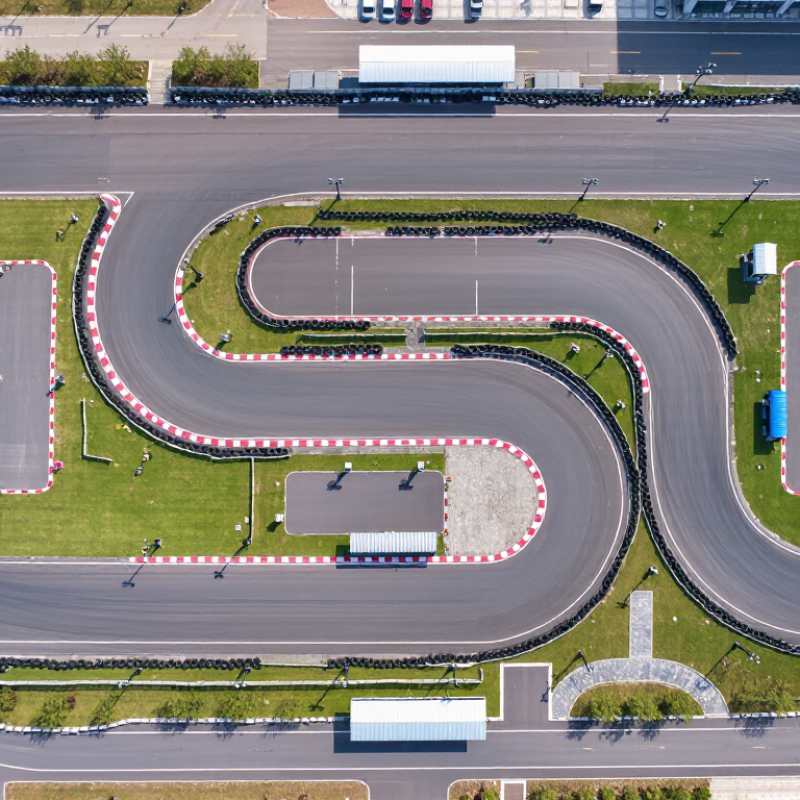
A strong single-level go-kart track begins with a clear driving flow, not a complicated shape. Measure the available site, mark access lanes, and reserve space for barriers, pit entry, and emergency movement. Experienced designers usually sketch several layouts before fixing the racing line. The first drawing is rarely right.

Use a rhythm of straights, braking zones, and medium-speed corners. A 40-meter straight can create excitement, but it needs enough runoff and controlled entry. Place slower corners near marshal viewpoints and avoid blind exits wherever possible. Drivers should understand the next turn before leaving the previous one. Keep pit traffic separate from the racing line. This small decision can prevent confusion during busy sessions.

Track width should match kart speed, driver ability, and expected traffic. Narrow sections may look exciting, yet they can create unnecessary contact and difficult overtaking. I prefer visible passing zones with consistent corner radii. Drainage also matters. A shallow slope can move rainwater away, while uneven surfaces may surprise drivers. Test the layout with cones before construction. Walk it, drive it, and change it. A neat plan on paper may still feel awkward at human eye level. Review sightlines again after barriers and lighting are installed.

China Best Single Level Go Kart Track Design Guide - Planning the Track Layout and Driving Flow

Planning Category Design Dimension Recommended Range / Target Layout and Safety Considerations Driving Flow Impact
Site Planning Total Site Area The required area depends on the track length, pit facilities, spectator zones, service access, parking, and emergency clearances. Provides enough space for a continuous circuit and organized circulation around the track.
Track Geometry Track Length A medium-length circuit can offer varied corners and overtaking opportunities without making the lap difficult to supervise. Longer layouts create more varied driving experiences and reduce repeated congestion at one corner.
Track Geometry Track Width Use wider sections on start zones, braking areas, and overtaking sections. Maintain consistent edge definition throughout the circuit. A wider racing line supports safer side-by-side movement and smoother passing.
Track Geometry Start and Finish Straight Place the timing line, marshal visibility points, pit entry, and pit exit where they do not interfere with the main racing line. A clear straight allows controlled acceleration, predictable merging, and easier race monitoring.
Corner Design Hairpin Corner Radius Provide adequate run-off space and avoid placing the corner immediately after a blind crest or obstructed approach. Hairpins create natural braking and overtaking zones but require careful speed control.
Corner Design Medium-Speed Corner Radius Use a smooth radius transition and consistent pavement grip to reduce sudden steering corrections. Maintains momentum and produces a stable, predictable racing line.
Corner Design Chicane Section Keep kerbs and barriers clearly visible. Avoid overly tight transitions that may cause kart-to-kart contact. Controls speed before high-risk areas and adds technical variety to the lap.
Elevation Maximum Longitudinal Gradient A single-level track should minimize steep grades, especially near pit entry, pit exit, braking zones, and drainage low points. Moderate gradients preserve predictable braking and acceleration behavior.
Driving Flow Track Direction Separate the racing direction from pedestrian routes, maintenance access, and emergency vehicle access. One-way flow reduces conflicting movements and simplifies marshal operations.
Driving Flow Pit Lane Width Use a clearly marked pit lane with a controlled entry and exit. Keep pit personnel away from the active racing line. Supports orderly kart release, driver changes, and safe recovery procedures.
Driving Flow Pit Entry and Exit Separation Avoid placing the pit exit directly before a tight corner or at the apex of a high-speed turn. Allows merging karts to build speed and join the racing line with fewer conflicts.
Safety Clearance Run-Off Area Use additional clearance at the outside of corners and at the end of long straights. Final dimensions should follow local safety requirements and risk assessments. Provides recovery space when a kart leaves the intended racing line.
Safety Barrier Barrier Offset from Track Edge Use impact-absorbing systems suitable for karting and avoid rigid obstacles close to the racing line. Reduces the severity of off-line impacts and preserves usable track width.
Visibility Marshal Sightline Divide the circuit into observable sectors. Remove visual obstructions created by walls, advertising panels, landscaping, or excessive elevation changes. Improves incident response and allows faster control of yellow-flag situations.
Surface Design Pavement Crossfall Direct water toward controlled drainage without creating uncomfortable lateral forces or unexpected loss of grip. Maintains consistent traction and reduces standing water during wet conditions.
Surface Design Drainage Arrangement Keep drainage grates outside the primary racing line whenever possible and make covers flush with the pavement. Prevents puddles, spray, and sudden changes in grip that can disrupt kart control.
Operations Recommended Group Size Adjust the number according to track length, kart performance, driver experience, visibility, and the number of available marshals. Maintains manageable spacing and reduces bunching at braking zones.
Operations Kart Release Interval Use staggered starts for novice drivers or when the first corner has limited visibility and a short approach. Creates larger gaps between karts and reduces first-corner congestion.
Operations Lap Timing and Control Position timing equipment where it is visible to operators and protected from impact, weather, and maintenance traffic. Supports consistent session control, lap counting, and performance feedback.
Passenger and Spectator Areas Pedestrian Separation Use physical barriers, controlled gates, marked walkways, and dedicated viewing zones. Do not allow pedestrians to cross the circuit during operation. Prevents interruptions and protects the continuity of kart circulation.
Emergency Planning Emergency Access Route Maintain a route for recovery vehicles and emergency responders. Confirm turning radii, gate widths, surface strength, and local fire-safety requirements. Enables rapid incident clearance while minimizing disruption to other track users.

Selecting Safety Features and Trackside Barriers

China Best Single Level Go Kart Track Design Guide: Selecting Safety Features and Trackside Barriers

A single-level go-kart track needs barriers that absorb energy, guide vehicles, and protect spectators.

During track reviews, I look closely at corner entry speeds, braking zones, and sightlines. These details often reveal risks that drawings miss.

Place impact-absorbing barriers outside high-speed turns, not only along the straight sections. Their surfaces should remain smooth, continuous, and free from sharp joints. Flexible systems can reduce vehicle damage, but they still need secure anchoring.

Barrier height should match the kart type, driver profile, and local safety requirements. A low edge may contain a kart but fail to protect a seated spectator.

Use additional fencing where pedestrians could reach the racing line. Keep fence posts outside likely impact paths whenever possible.

Gates need positive latches and should never open toward moving traffic. Clear separation matters.

Wide runoff areas help reduce collisions before a kart reaches the barrier. However, excessive runoff can create another problem.

Drivers may use it as an unofficial shortcut. This needs testing. Marking, curbing, and barrier angles should discourage misuse without creating trip hazards.

A qualified engineer should verify stopping distances, barrier connections, drainage, lighting, and emergency access.

Operators should inspect fasteners and barrier movement before every session. Records improve reliability. Small defects can grow quickly.

Recheck the design after real driving data, because the first layout is rarely perfect.

Designing Facilities for Drivers and Spectators

China Best Single Level Go Kart Track Design Guide

Designing Facilities for Drivers and Spectators

A strong single-level go-kart track should guide drivers and spectators safely. Separate racing lanes from walking routes with clear barriers and controlled entry points. Use wide sightlines, so visitors can watch several corners without leaning over fences. Place viewing areas near slower turns, where braking and overtaking remain visible. A shaded platform matters during hot summers and sudden rain.

The pit area needs practical spacing. Drivers should have room to adjust helmets, receive instructions, and leave the track without crossing active lanes. Smooth flooring reduces trips. Accessible toilets and seating should remain close to the main viewing zone. Track surfaces need consistent grip, drainage, and visible edge markings. Local engineers should review fire protection, accessibility, noise, and emergency access requirements. Rules vary by location.

Tips: Test the layout with staff before construction. Walk every spectator route. Watch for blind corners, crowd buildup, and confusing signs. A design can look excellent on paper but feel cramped in use. Allow maintenance access from the beginning. This detail is often missed. Use simple signs with strong contrast, and keep instructions short. A quiet family viewing corner may improve comfort, though it could reduce direct track visibility. Recheck that compromise during real operating hours.

Estimating Construction Costs and Maintenance Needs

Designing a single-level go-kart track in China requires more than drawing exciting corners. Construction costs usually depend on land preparation, pavement quality, barriers, drainage, lighting, and support buildings. A professional estimate should separate civil works from equipment and operating facilities. Local labor and material prices can change between provinces, so old quotations may mislead investors.

For a medium-sized outdoor track, keep a contingency allowance of 10% to 15%. This covers soil replacement, unexpected drainage work, and design adjustments. Asphalt may reduce initial costs, but poor compaction can create cracks and uneven racing lines. Concrete lasts longer in some conditions, yet it demands accurate joints and stronger preparation. These choices need site-specific engineering advice.

Maintenance is a continuing expense, not an afterthought. Inspect the racing surface weekly for cracks, loose stones, and standing water. Check barriers, tire pressure equipment, lighting, and emergency access routes before opening. Drainage channels often collect leaves and mud after heavy rain. Cleaning them regularly prevents expensive surface damage. Annual maintenance may reach 3% to 6% of construction value, although this estimate can be higher in busy facilities. My earlier budgets underestimated labor time; real inspections take longer than expected.

Tips: Request three local quotations. Record every assumption. Test soil before final design. Keep spare barrier parts onsite. Review costs after the first operating season.

Have Questions?

Talk to a product specialist today: 1-800-308-6788

Snake Tray Catalog

snake tray® CATALOG

the new catalog is here. AVAILABLE IN PRINT AND ONLINE.

DOWNLOAD A PDF REQUEST A PRINTED COPY
CALL US TODAY