China Top 10 HDD Horizontal Drilling Rig Manufacturers
China’s leading HDD manufacturers compete on more than machine size. Buyers also weigh torque, pullback force, drilling-fluid capacity, control systems, and service access. These details matter on a muddy utility project, where downtime can quickly disrupt the worksite. Hdd Horizontal Drilling supports underground installation with limited surface excavation, but results depend on ground conditions and careful planning.
Industry data provides useful context, not a direct ranking of Chinese suppliers. The American Society of Civil Engineers’ 2021 Report Card estimated a US infrastructure investment gap of $2.59 trillion through 2029. That figure is not an HDD market forecast. It does, however, illustrate the scale of infrastructure renewal behind demand for installation methods that reduce surface disruption. Market estimates should be compared cautiously because reports use different definitions and regional scopes.
Dr. Sam Ariaratnam, a trenchless-construction researcher, has emphasized through his work a practical point: successful HDD depends on matching the method to site conditions and executing the bore carefully. The equipment alone is not enough. This guide compares ten China-based manufacturers by product range, technical information, manufacturing experience, and after-sales support. Readers should verify specifications directly, especially maximum pullback, drilling depth, and warranty terms. Published figures can be incomplete. Supplier claims deserve checking against project requirements, independent documentation, and a clear service plan.
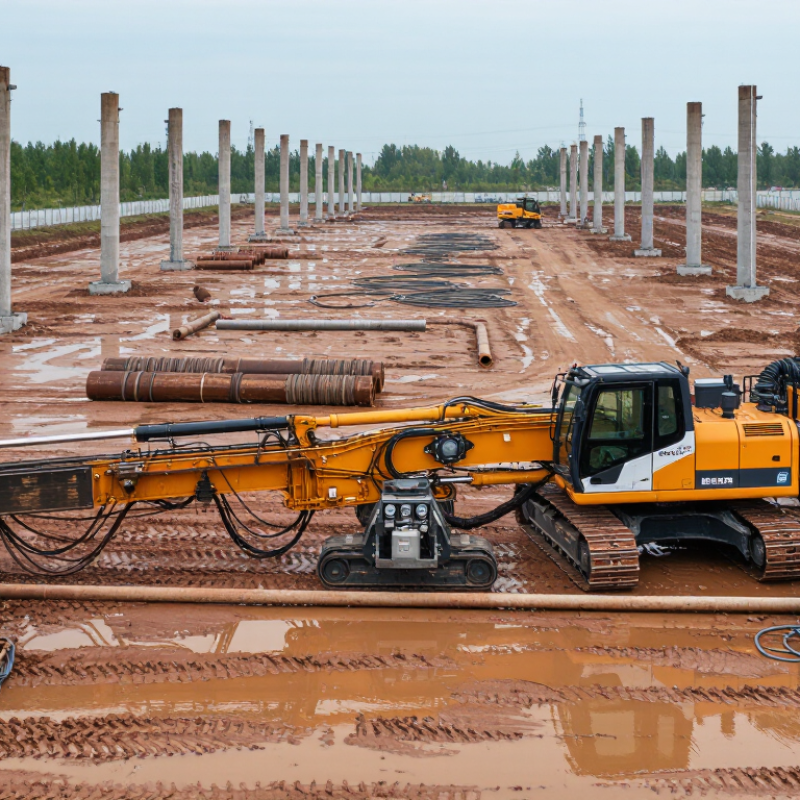
What Is a Horizontal Directional Drilling Rig and How Does It Work?
A horizontal directional drilling rig installs underground utilities with limited surface excavation. Its main components are a tracked rig, drill pipe, a steering head, and a fluid system. Unlike a vertical drill, it follows a planned curved path beneath roads, landscaped areas, or waterways. The rig operator controls thrust and rotation while a locating technician tracks the drill head from the surface. Small corrections matter. Soil changes can shift the bore, and locating readings require careful interpretation.
The work usually begins with a pilot bore. Drilling fluid, commonly a bentonite-based mixture, cools the cutting head and carries soil cuttings back through the bore. Once the pilot reaches its exit point, crews attach a reamer and enlarge the hole in stages. They then pull the product pipe through the prepared path. Pipe strength, bend limits, soil conditions, and fluid management all affect the installation. HDD Consortium good-practice guidance emphasizes planning and monitoring; it is not a promise that every ground condition can be controlled.
The infrastructure need is substantial. The U.S. Environmental Protection Agency’s 2023 Drinking Water Infrastructure Needs Survey and Assessment estimates $625 billion in drinking-water investment needs over 20 years. That figure does not measure HDD demand, but it shows why less disruptive installation methods attract attention. HDD can reduce open trenches, yet it still requires careful site investigation and contingency planning. Mud returns can be messy. I have seen project descriptions make the method sound simpler than the fieldwork really is.
How China’s HDD Rig Manufacturing Industry Is Structured
China’s HDD rig sector is best understood as a layered supply chain, not a simple ranking of finished-machine makers. A rig assembler integrates the frame, rotary drive, mud system, guidance electronics, and controls. Specialist suppliers provide engines, hydraulic components, drill rods, and locating equipment. Fabrication shops produce frames, booms, and wear parts. Field service connects factory design with ground conditions. Small details matter: a hose fitting or rod-thread tolerance can stop a jobsite.
Official statistics provide context, but not an HDD-only census. China’s National Bureau of Statistics reported that manufacturing value added grew 5.0% in 2023, while equipment manufacturing rose 6.8% (2023 Statistical Communiqué). These figures indicate a broad industrial base; they do not measure HDD output or market share. That distinction matters. Manufacturers serve different needs, from compact rigs for urban utility work to higher-thrust systems for longer crossings. Some rely on in-house integration; others depend more on specialist suppliers and regional service networks. The structure is mixed. Public data remains limited, and comparing suppliers only by rated pullback force can overlook parts lead time, field reliability, and operator training. A useful comparison, but an incomplete one.
China’s Top 10 HDD Rig Manufacturers: Company Profiles
China’s top ten HDD rig manufacturers are best compared through working capability, not brochure horsepower. A useful profile records rig class, pullback force, torque, drilling-fluid flow, and transport dimensions. These figures shape whether a machine can handle a narrow urban street or a long utility crossing. Small details matter. Ask for soil-specific performance data, not only maximum ratings.
Profiles should also describe factory testing, component sourcing, operator support, and parts availability. The Global Infrastructure Outlook, prepared by Oxford Economics and the Global Infrastructure Hub, estimates a $94 trillion global infrastructure investment need by 2040. That outlook helps explain demand for efficient underground construction, but it does not prove every rig will perform well. Buyers should check test conditions and compare like with like.
A credible manufacturer profile includes field references, maintenance intervals, warranty terms, and service response times. It should show what happens after a pump fault on a wet jobsite. Product ranges can reveal whether a supplier serves compact municipal work, heavy pipeline projects, or both. Yet rankings can hide important differences. A high-capacity rig may be the wrong fit for a cramped site, and published specifications rarely tell the whole story.
How the Manufacturers’ Product Ranges and Capabilities Compare
China’s leading HDD horizontal drilling rig manufacturers differ less by headline pulling force than by how well their product ranges match specific ground conditions. Some offer compact rigs for utility connections and restricted urban sites. Others build higher-capacity machines for longer crossings, larger pipes, or tougher formations. Comparing these ranges helps buyers avoid paying for capacity they will rarely use.
Capabilities also vary in control systems, support equipment, and customization. Check whether a rig’s torque and thrust suit the planned pipe diameter and soil profile. Review machine dimensions, setup time, fluid-system capacity, and access to replacement parts. A detailed specification sheet is useful, but it cannot show how easily crews can service a rig in the field. Ask for operating references and clear maintenance requirements. Small details matter.
Tips: Compare working ranges, not just maximum ratings. Request the same test conditions for performance figures, and confirm what accessories are included. Ask how the supplier handles training, troubleshooting, and parts availability. A lower purchase price may bring longer downtime; still, service promises deserve verification. One overlooked point: local ground conditions can make a capable machine feel underpowered.
China Top 10 HDD Horizontal Drilling Rig Manufacturers - How the Manufacturers’ Product Ranges and Capabilities Compare
Comparison basis: Company names and brands are omitted. The rows below are anonymized, representative product-capability profiles across the Chinese HDD equipment market—not a verified ranking or company-specific specification sheet.
HDD Rig Applications and Key Factors for Choosing a Manufacturer
China Top 10 HDD Horizontal Drilling Rig Manufacturers
Horizontal directional drilling supports utility installation beneath roads, railways, rivers, and landscaped areas with limited surface disruption. A typical project involves a pilot bore, reaming, and pulling the product pipe through the finished path. Ground conditions matter. Mixed soil, cobbles, and groundwater can change the drilling plan and equipment demands quickly.
When comparing manufacturers, match rig capacity to the work you actually perform. Check pullback force, rotary torque, rod length, and whether the guidance system suits your crews’ workflow. Ask for clear specifications, maintenance schedules, operator training, and access to commonly replaced parts. Request performance details from projects with similar ground and pipe dimensions. A large capacity figure alone does not prove a rig will be productive on your sites. Some specifications are difficult to compare, so verify them with practical questions and records.
Tips: Discuss a real bore profile with the manufacturer before choosing. Include entry and exit angles, estimated length, soil changes, and fluid handling needs. Do not overlook transport dimensions or setup space. A brochure may look convincing, but field support and dependable parts can matter more than a small difference in rated power. One thing is easy to miss: conditions rarely stay uniform along the whole bore.
China HDD Rig Manufacturers: Applications and Capacity Selection
Representative HDD rig pullback capacity classes, converted from US short ton-force to kilonewtons (kN).
Pullback capacity is one factor in selecting a rig. Match the required capacity to the pipe, bore length, ground conditions, and project access; ratings and suitable applications vary by model. The ton-force values shown are illustrative capacity classes, not a ranking or market survey.
