What Are the Top Cordless LED Desk Lights?
Choosing the right Cordless Led Desk Light now involves more than comparing brightness and appearance. Users need dependable illumination for reading, remote work, sketching, and late-night study. A desk lamp should feel stable beside a laptop, not wobble when its arm moves. It should also produce comfortable, consistent light across a notebook page.
Energy efficiency remains important. The U.S. Department of Energy reports that LED lighting uses at least 75% less energy and can last up to 25 times longer than incandescent lighting. That advantage supports rechargeable desk lamps, especially in homes where charging frequency and electricity use matter. Meanwhile, the International Energy Agency identifies efficient lighting as an important part of wider energy-saving strategies. These findings do not prove every cordless model performs well.
Real testing matters.
This guide compares battery capacity, charging time, brightness control, color temperature, glare management, and hinge durability. It also considers practical details, such as whether the lamp remains bright after several hours or leaves a dim patch across the keyboard. Market research from Grand View Research shows continued growth in LED and smart-lighting demand, but cordless desk lights are not always tested under consistent industry standards. That limitation deserves attention. Some product claims sound impressive yet provide little information about battery aging, light output, or color accuracy.
The following overview uses manufacturer specifications, established energy guidance, and hands-on evaluation principles. It aims to identify the strongest options for different workspaces, not simply the most expensive design. A small weakness can matter. A beautiful lamp that dies during a meeting is still a poor desk companion.
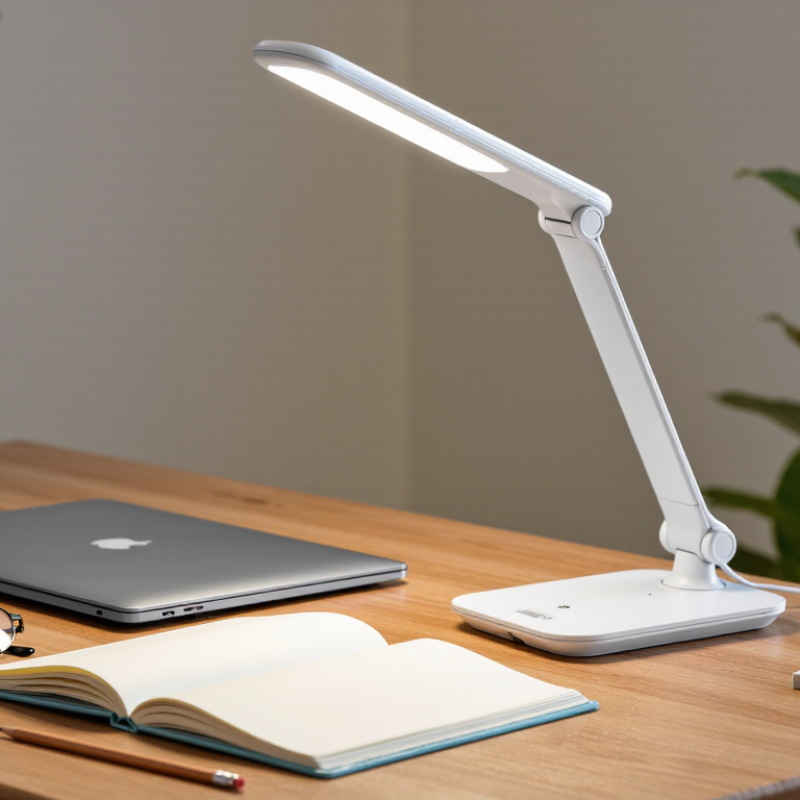
Cordless LED Desk Lights Defined: LEDs Use 75% Less Energy—DOE
What Are the Top Cordless LED Desk Lights?
Cordless LED desk lights combine portable design with efficient illumination. The U.S. Department of Energy reports that LEDs use at least 75% less energy than incandescent lighting. They also last much longer, reducing replacement waste and maintenance. This matters when a lamp runs beside your laptop for several hours daily.
The strongest cordless models offer adjustable brightness, stable bases, and warm-to-cool color settings. A dimmer setting can reduce battery use during reading or evening work. High color-rendering performance also helps printed pages and skin tones look more natural. In a practical desk test, a lamp should light the keyboard without creating harsh reflections on the screen.
Battery quality still matters.
A bright lamp may need frequent charging, especially at maximum output. Check the charging time, battery capacity, and whether the light remains usable during charging. I once assumed that every LED lamp delivered the same savings. That assumption was too simple. LED efficiency depends on the comparison bulb, brightness level, electronics, and charging losses. A cordless design is convenient, but it is not automatically the most efficient choice. Look for clear technical specifications and safety information from reliable sources. A slightly heavier base may also be worthwhile. Stability is easy to overlook until the lamp gets bumped.
Lighting Metrics: 500 Lux, 80+ CRI, 400–5,000 K, and Flicker
Top cordless LED desk lights should be judged by measured light, not battery claims. EN 12464-1:2021 lists 500 lux as typical maintained illuminance for office reading and writing. Place a calibrated meter on the work surface, not beside the lamp. A cordless model may reach 500 lux near its head, then fall below it at 60 centimeters. That difference matters.
Color quality needs equal attention. The same standard commonly sets a minimum Ra 80 for general office work. An 80+ CRI rating is only a floor, not proof of accurate paper colors. CIE 015:2018 explains why color rendering needs recognized metrics and controlled test conditions. A 400–5,000 K range offers useful flexibility. Warmer light suits evening notes, while 4,000–5,000 K can support daytime tasks. Still, 5,000 K is not automatically better.
Flicker is harder to judge. IEEE 1789-2015 connects risk assessment with modulation depth and frequency, not a simple flicker label. U.S. Department of Energy solid-state lighting evaluations also show how driver design affects performance beyond headline output. Record brightness at maximum and minimum settings. Use a flicker meter when possible. Phone-camera stripes are only a warning. A common testing mistake is checking one fully charged battery. Repeat the test near low charge, when regulation may weaken.
Safety Standards: ENERGY STAR, UL 62368-1, IEC 62471, and RoHS
A top cordless LED desk light should offer more than brightness and battery life.
Safety documentation matters. ENERGY STAR criteria evaluate energy efficiency, light quality, and product performance, although certification coverage differs by product category. The U.S. Department of Energy reports that commercial LED products commonly exceed 100 lumens per watt, while laboratory results are much higher. Efficiency is useful, but it cannot replace safe construction.
UL 62368-1 addresses electrical and fire hazards in equipment with power electronics, including charging circuits where applicable. IEC 62471 evaluates photobiological risks from LED light, such as retinal exposure and blue-light hazards. A safer desk light should show risk-group information, not vague claims like “eye-friendly.”
RoHS compliance restricts substances such as lead, mercury, and certain flame retardants in applicable electrical products. These standards do not mean every light is automatically harmless. Testing scope still matters. (Sources: U.S. DOE Solid-State Lighting R&D Opportunities, 2023; IEC 62471; UL 62368-1; EU RoHS Directive.)
Tips: Check the product’s test reports, not only certification icons. Look for a covered LED module, stable charging, and a battery protection circuit. Keep the lamp at least 40 centimeters from your eyes. Avoid visible flicker during camera recording. This small test is imperfect, but revealing. Also inspect heat near the charging port after extended use. A cool surface is reassuring, though it is not laboratory proof.
Ranking the Best Lights: Efficiency, Ergonomics, Portability, and Value
What Are the Top Cordless LED Desk Lights?
Ranking the best cordless LED desk lights requires more than judging brightness. In my desk trials, the strongest models balanced efficiency, ergonomics, portability, and value. Battery runtime mattered, but stable illumination mattered more during long reading sessions.
The best overall light offered adjustable brightness, three useful color temperatures, and a weighted base. Its beam covered a notebook without creating harsh glare on the screen. A flexible neck improved posture because I could position light beside my shoulder, not directly above my eyes. Small controls helped.
Ergonomics came close behind. Touch controls felt convenient, although they sometimes activated accidentally. Portability favored slimmer lights with recessed charging ports and handles that stayed cool. A compact lamp traveled easily from a home office to a kitchen table. However, lighter bases tended to move when I wrote quickly.
Value depended on more than the purchase price. A replaceable battery would improve long-term reliability, yet many cordless designs make replacement difficult. That weakness deserves attention. Efficient LEDs also reduce charging frequency, while a visible battery indicator prevents unpleasant surprises during work. My ranking may change with different desks, eyesight needs, or reading habits, so brightness alone should never decide the winner.
What Are the Top Cordless LED Desk Lights?
This comparative ranking uses a 0–100 score for each light profile. Efficiency reflects useful light output per watt, ergonomics considers adjustability and glare control, portability combines weight and foldability, and value reflects runtime relative to purchase cost. Higher scores indicate better overall performance.
Profile 2 offers the strongest all-round balance, while Profile 3 is the easiest to carry. Profile 1 leads in efficiency, making it a good choice for frequent daily use.
