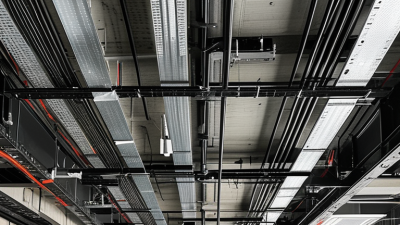
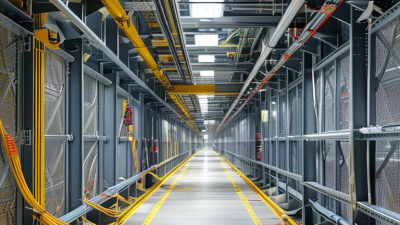
Choosing the right black cable tray involves more than matching a dark finish to a building’s interior. It requires careful attention to cable weight, ventilation, installation space, corrosion exposure, and future maintenance. In commercial facilities, installers often compare ladder, perforated, solid-bottom, wire mesh, and channel trays before making a final decision.
Each design solves a different practical problem. Ladder trays support heavier cable bundles and improve airflow around power cables. Perforated trays offer balanced support and convenient fixing points. Solid-bottom trays protect sensitive wiring from falling dust, although they may retain more heat. Wire mesh trays are lightweight and flexible, especially where frequent cable changes are expected. Channel trays suit smaller runs, but their limited capacity can become restrictive.
The black finish also deserves closer inspection. It may come from powder coating, painted steel, or a manufactured polymer surface. These finishes can improve appearance and provide useful protection, but performance depends on coating quality and the surrounding environment. A tray installed beside machinery, outdoors, or in a humid service area needs a more careful material assessment.
No single type wins every project. That sounds obvious, yet it is often overlooked. A neat-looking black cable tray may still be poorly suited to heavy loads or crowded cable routes. This guide compares the top types, their practical strengths, common limitations, and selection factors. The goal is dependable guidance based on installation realities, not only product photographs or surface appearance.
What Is a Black Cable Tray? It is a support system that carries power, control, and communication cables above floors or along walls. Its black appearance usually comes from a powder-coated, painted, or polymer-treated surface. The tray itself may be steel, aluminum, or another engineered metal. Black does not automatically mean stronger or more corrosion-resistant. Inspect the coating specification carefully. In field work, I have seen attractive finishes fail when installers ignored moisture, salt, or chemical exposure.
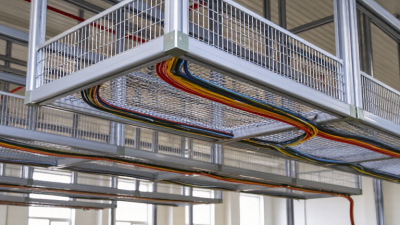
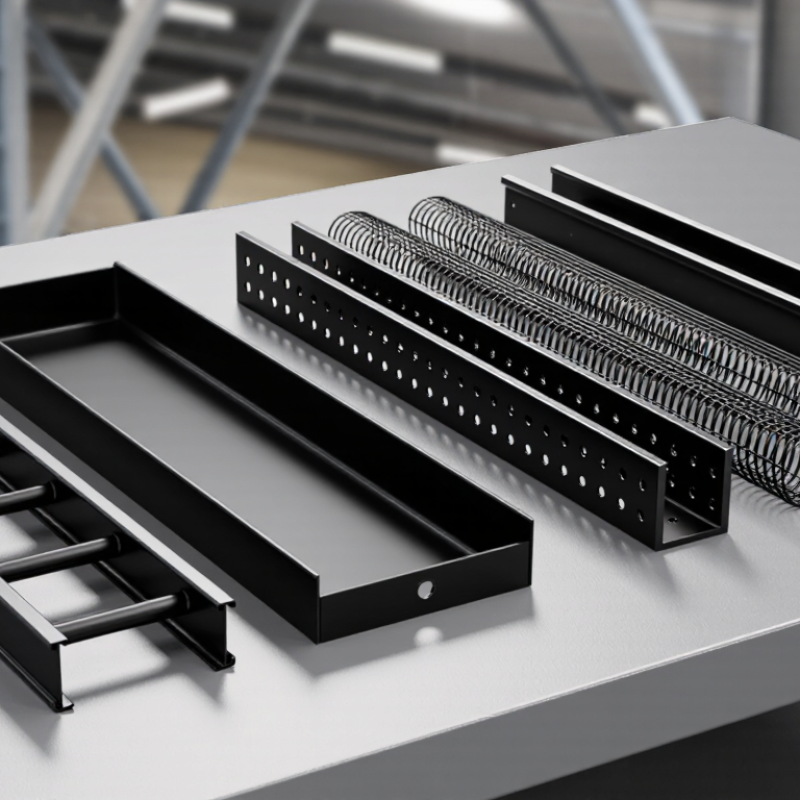
The main types include ladder, perforated, solid-bottom, wire mesh, and channel trays. Ladder trays suit heavier cable runs because their rungs improve ventilation and reduce cable contact. Perforated trays offer steady support for smaller cables and allow flexible fixing points. Solid-bottom trays protect cables from falling dust and small objects, although they may retain more heat. Wire mesh trays are lightweight and convenient for frequent route changes. Channel trays work well for compact, low-capacity wiring. Selection depends on cable weight, bend radius, airflow, and maintenance access.
A black cable tray can also improve visual coordination in offices, studios, and exposed industrial spaces. It may hide minor dust better than a bright metallic finish, but scratches can reveal bare metal. That detail is easy to miss. Confirm load capacity, grounding continuity, coating thickness, and support spacing before installation. Leave room for future cables. I once measured a route too tightly, and later additions forced unnecessary rework. The neatest tray is not always the most practical one.
Black cable trays are not made from one universal material. Most commercial systems use carbon steel, aluminum, or fiber-reinforced plastic (FRP). The black appearance usually comes from powder coating, paint, anodizing, or colored resin. Material selection should follow load, corrosion exposure, heat, and installation conditions—not color alone.
Powder-coated carbon steel is widely chosen for indoor offices, warehouses, and plant rooms. It offers high strength and clean edges, while the coating improves appearance and surface protection. However, damaged coating can expose steel to rust, especially around cut edges and fasteners. Aluminum trays are lighter and naturally corrosion resistant. Black powder coating or anodizing can provide a darker finish, though careless handling may scratch it. In long runs, expansion and bonding details deserve attention.
FRP trays use glass fibers embedded in resin and are useful in damp, chemical, or coastal areas. Their low weight helps installers, but support spacing must match the manufacturer’s load data. Black resin may include UV stabilizers, yet outdoor exposure still requires verification. Stainless steel with a black coating is another option for demanding hygiene or corrosion conditions. It is rarely needed for routine projects. Grounding also needs checking: an insulating finish can interrupt electrical continuity. Specifications sometimes overlook this small point. That oversight can become expensive during inspection.
Black cable trays are available in several practical forms, and each type suits a different installation condition.
Ladder trays use two side rails with cross rungs. They provide strong support, good ventilation, and easy cable access. They work well for power cables in plant rooms and service corridors.
Perforated trays have a continuous base with ventilation holes. They protect smaller cables better and reduce sagging between supports.
Solid-bottom trays offer the most surface protection. They help shield cables from falling dust, dripping materials, and accidental contact. However, they retain more heat and may need careful cable loading.
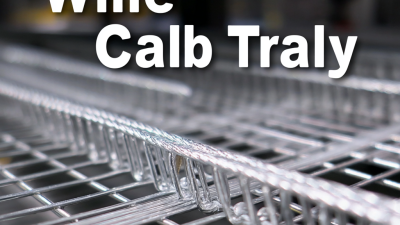
Wire mesh trays are lighter and easier to cut on site. Their open structure supports airflow and drainage, although very small cables may need additional ties.
Black finishes can improve appearance and may help blend trays with dark ceilings or equipment areas. Finish quality matters more than color alone.
Tips: Check cable weight, span length, ventilation, and local installation requirements before choosing. Use compatible supports and smooth fittings. Inspect cut edges for sharp metal. A small oversight can damage insulation later. I have found that overloaded trays often look acceptable at installation, then become difficult to maintain. Leave usable space for future cables, but avoid assuming every project needs the same allowance. Moisture, heat, and cleaning chemicals can also affect the selected coating.
Black cable trays are commonly made from powder-coated steel, aluminum, or stainless steel. Each type has a different balance of strength, weight, corrosion resistance, and cost. Powder-coated steel supports heavy cable bundles well and suits indoor industrial spaces. Its black finish also hides dust and minor marks. However, chipped coating can expose the steel beneath it.
Aluminum trays are lighter and easier to carry during installation. They resist moisture and are useful where workers need to reduce structural loading. Their softer surface may dent under rough handling. Stainless steel offers stronger corrosion resistance in humid or chemically demanding areas. It usually costs more, and its weight can complicate overhead installation. The finish may also show scratches more clearly than painted steel.
Shape matters as much as material. Ladder trays improve ventilation and allow cables to be secured at regular intervals. Perforated trays provide better support for smaller cables and accessories. Solid-bottom trays protect cables from falling dust, but they may hold heat and water if drainage is poor. In practice, installers should compare load ratings, span distance, cable fill, grounding continuity, and local electrical requirements. A black finish is not automatically suitable outdoors. UV exposure and damaged coating still need attention. I have seen projects choose appearance first, then reconsider after maintenance access became difficult.
| Cable Tray Type | Typical Construction | Ventilation | Cable Support | Common Applications | Main Advantages | Important Limitations | Relative Cost |
|---|---|---|---|---|---|---|---|
| Black Ladder Cable Tray | Two longitudinal side rails connected by regularly spaced rungs; commonly made from steel or aluminum with a black powder-coated or painted finish. | Excellent | High support for power, control, and communication cables; cables can be secured to the rungs. | Industrial facilities, data centers, utility areas, manufacturing plants, and long cable runs. | Strong airflow, easy cable access, long spans, and efficient cable installation. | Offers less continuous protection from dust, falling objects, and small debris; cables may require additional fastening. | Medium |
| Black Perforated Cable Tray | A formed tray with a ventilated base containing punched openings and raised side flanges. | Good | Continuous base supports small, medium, and mixed cable bundles; openings can be used for fastening. | Commercial buildings, control systems, communication networks, and general electrical distribution. | Balanced combination of cable support, ventilation, routing flexibility, and protection. | Typically has lower airflow and may be heavier than ladder tray; openings can collect dirt in some environments. | Medium |
| Black Solid-Bottom Cable Tray | A tray with a continuous, non-perforated base and raised side walls; may be supplied with a cover. | Limited without additional ventilation provisions | Very good continuous support for delicate, small-diameter, or closely spaced cables. | Instrumentation, control wiring, low-voltage systems, and locations requiring better cable protection. | Reduces cable sagging and helps shield cables from falling debris, dirt, and accidental contact. | Heat dissipation is less effective; cable fill and thermal conditions require careful design. | Medium to High |
| Black Wire Mesh Cable Tray | A lightweight basket-style structure made from welded steel wire with a black protective finish. | Excellent | Suitable for low- and medium-density cable bundles; cables can be tied directly to the mesh. | Data centers, telecommunications rooms, office fit-outs, and under-floor or overhead pathways. | Lightweight, easy to cut and route, highly ventilated, and convenient for frequent cable changes. | Generally less suitable for very heavy cable loads or long spans; sharp cut edges must be finished safely. | Low to Medium |
| Black Channel Cable Tray | A compact, narrow tray or channel with a base and side walls, often used for small cable groups. | Fair to Good, depending on perforation | Good for limited cable quantities, branch circuits, and small control or communication cables. | Small equipment connections, building services, control panels, and restricted spaces. | Compact dimensions, neat appearance, and convenient installation in confined areas. | Lower load capacity and limited expansion space compared with larger tray systems. | Low |
| Black Trough Cable Tray | A trough-shaped tray with a ventilated or partially ventilated base and continuous side walls. | Good | Provides continuous support and helps keep cables contained within the tray. | Power distribution, industrial wiring, control cables, and routes needing moderate protection. | Combines cable containment with ventilation and offers better side protection than open ladder designs. | Usually has less airflow and may be more difficult to modify than wire mesh or ladder tray. | Medium |
Choosing the right black cable tray starts with the environment, not the color. Black trays are commonly made from coated steel, aluminum, or stainless steel. Coated steel suits indoor commercial routes with moderate corrosion risk. Aluminum reduces weight for long overhead runs. Stainless steel performs better in damp, chemical, or coastal areas, although its higher cost is easy to underestimate.
Check the cable weight, support span, and future capacity before selecting width. NEMA VE 1 load tables include tray ratings from 50 to 150 pounds per foot, depending on span and construction. Match those ratings to the actual cable bundle, not an optimistic estimate. NFPA 70, Article 392, also provides cable-tray fill and installation requirements. Leave practical space for new circuits. A crowded tray can restrict heat dissipation and complicate maintenance.
Measure the route carefully. A 300-millimeter tray may look adequate on paper, but bends, drops, and power separation consume usable space. For outdoor use, confirm the black finish’s UV resistance and coating thickness. Some dark coatings absorb more solar heat, which may affect cable ampacity in exposed locations.
IEC 61537 offers relevant performance guidance for cable tray systems, including mechanical strength and electrical continuity. Verify bonding hardware at every joint. I would also inspect cut edges after installation; missed touch-up work is a small detail that can become corrosion. The safest choice balances load, ventilation, corrosion resistance, access, and expansion space.
Fill out the form below and our team will get back to you ASAP.
Snake Tray® is Green and Proudly Powered by the Sun! Snake Tray is committed to designing and manufacturing products that have many green benefits. Our products are made of recycled goods, minimize material waste, are energy efficient, use less non-renewable resources and nest together read more…
Snake Tray® 291 Skip Lane, Bay Shore NY 11706 | PHONE: 631-674-0004 | FAX: 631-674-0010 | www.bakoselectric.com | LEGAL | MADE IN USA
© 2025 SnakeTray. All rights reserved
Fill out the form below to download your document.